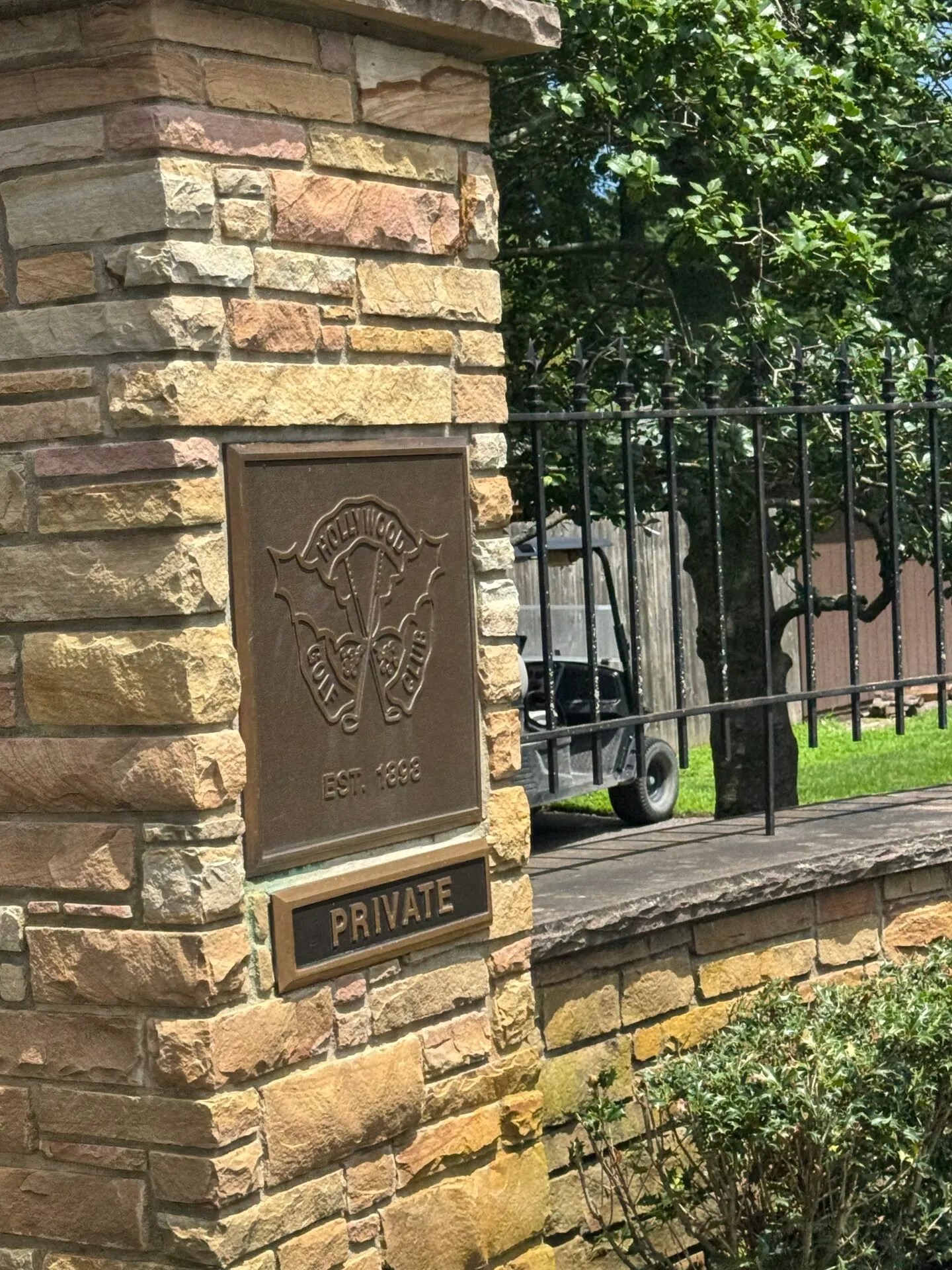
After playing North Jersey, we thought we had a handle on Walter Travis. We were wrong. Hollywood Golf Club is Travis with the volume turned up. The same strategic intelligence, the same emphasis on positioning, but deployed on a property with far more drama and elevation than anything we had seen from him before. If North Jersey was Travis the chess player, Hollywood was Travis the artist, painting with bolder strokes on a bigger canvas.
The club sits in Deal, New Jersey, on the Jersey Shore, in a stretch of coastline that holds an extraordinary concentration of elite private golf. Hollywood is part of that corridor, but it stands apart because of the way Travis used the hilly terrain to create a course that is simultaneously intimate and expansive. You move through corridors framed by mature trees, climb to elevated tees with sweeping views, and then drop back down into valleys where the outside world disappears. The rhythm of the course is almost musical. Crescendo, decrescendo, crescendo again.

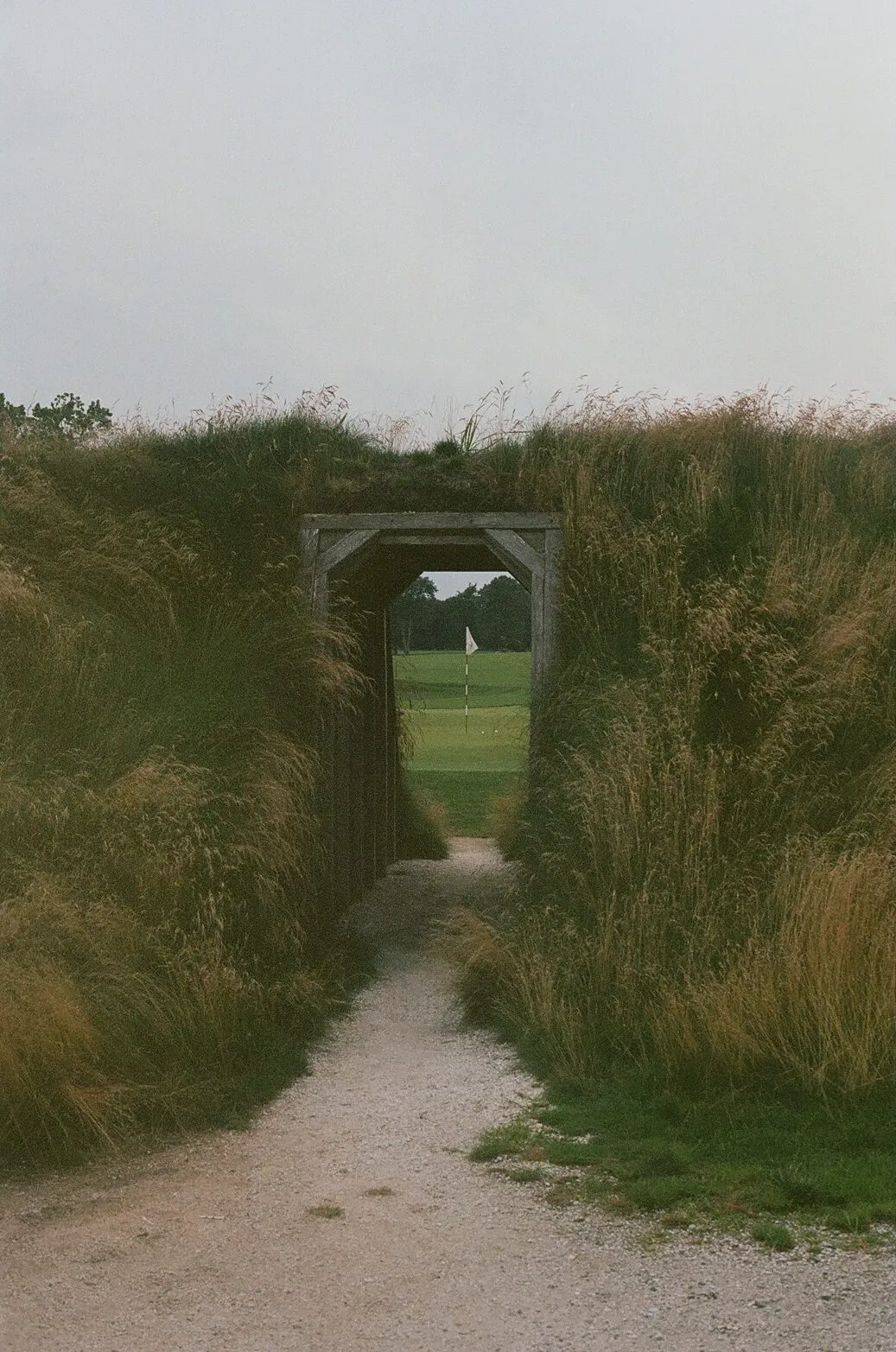
The foursome at Hollywood's iconic tunnel. You walk through a grass-covered mound to reach the green on the other side. You do not see this at many golf courses.
Travis Unleashed
The thing that separates Hollywood from North Jersey, beyond the obvious difference in terrain, is the boldness of the design decisions. Travis takes bigger swings here. The bunkering is more dramatic, carved into hillsides and set at angles that demand real commitment from the tee. The green complexes are more adventurous, with contours that create genuine do-or-die moments on approach shots. Where North Jersey whispers its challenges, Hollywood states them plainly, and then punishes you if you do not listen.
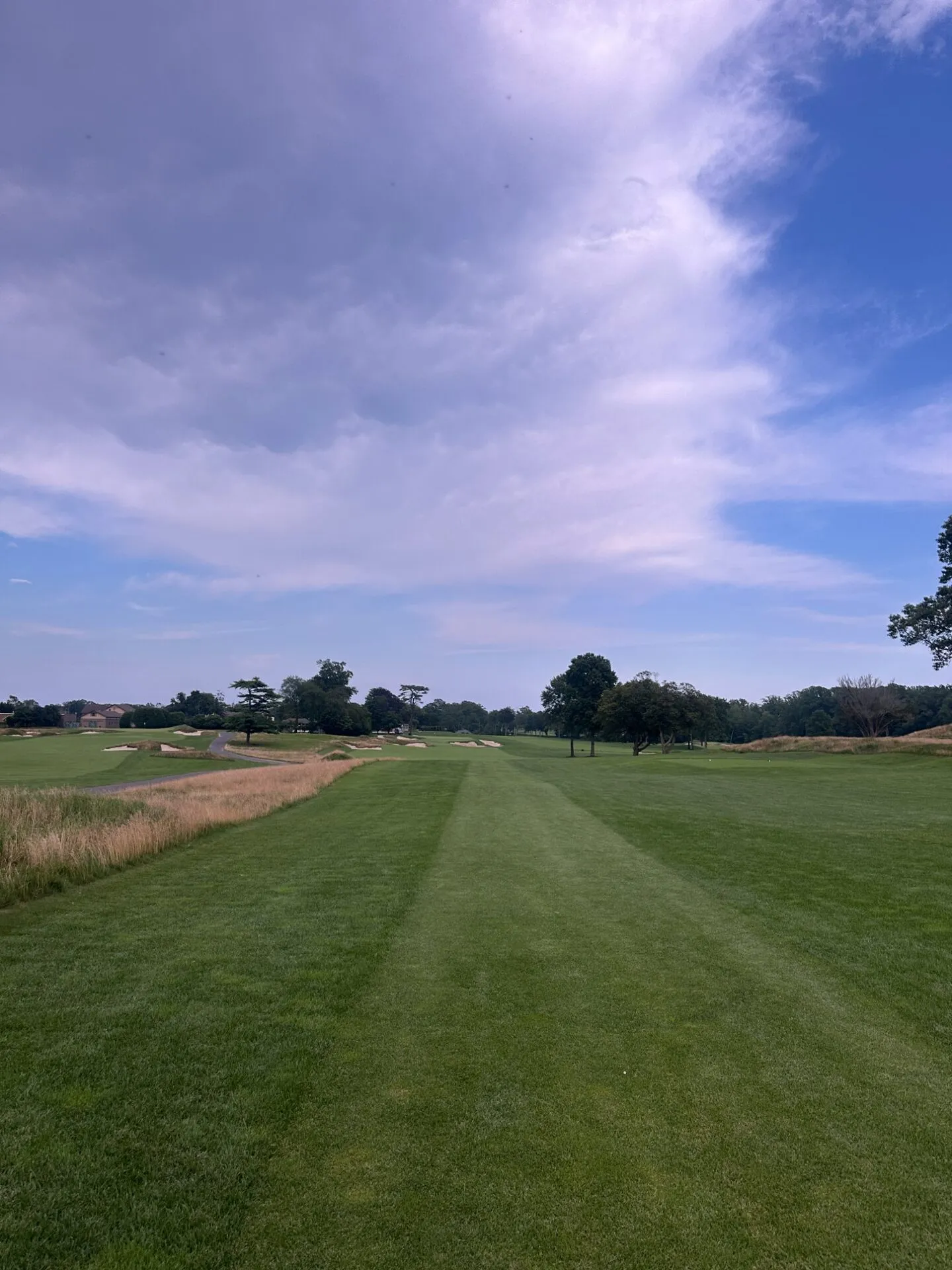
The elevation changes make the course play much longer than the yardage suggests. Uphill par fours that look manageable on the scorecard become grinding tests of ball-striking when you account for the climb. Downhill holes offer the thrill of seeing the entire hole laid out below you, every bunker and contour visible, every strategic option clear. Those moments, standing on an elevated tee with the course spread out at your feet, are some of the most dramatic visuals we encountered on the entire trip.

The Back Nine
The back nine at Hollywood is where the course reaches its peak. The terrain becomes more aggressive, the holes more demanding, and the views more rewarding. Travis routes you through the highest points on the property and then brings you back down through corridors that feel almost private, sheltered from the wind and the world. It is a master class in pacing. Alternating between exhilarating openness and quiet concentration, keeping you engaged and slightly off-balance all the way to the clubhouse.
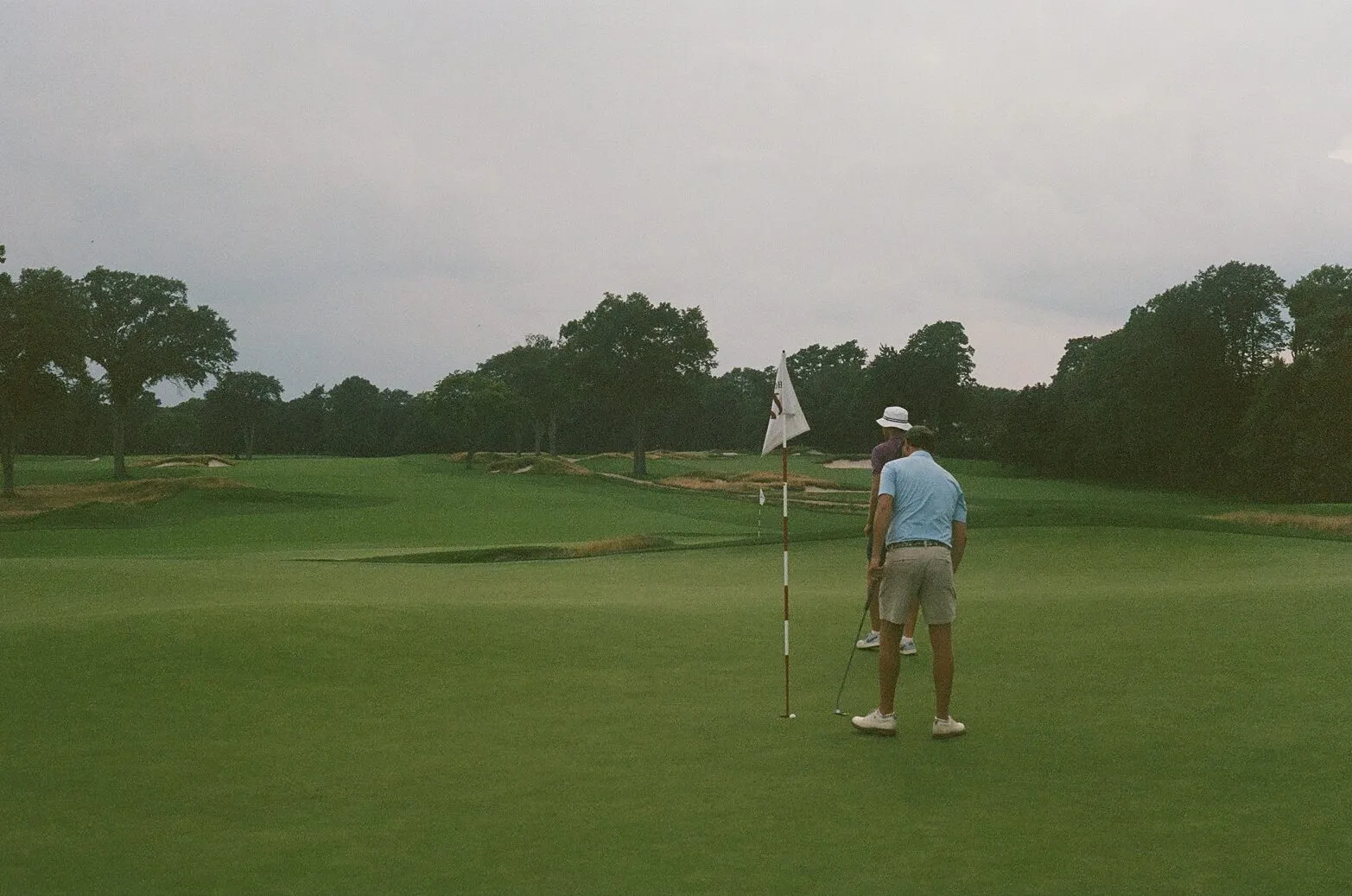
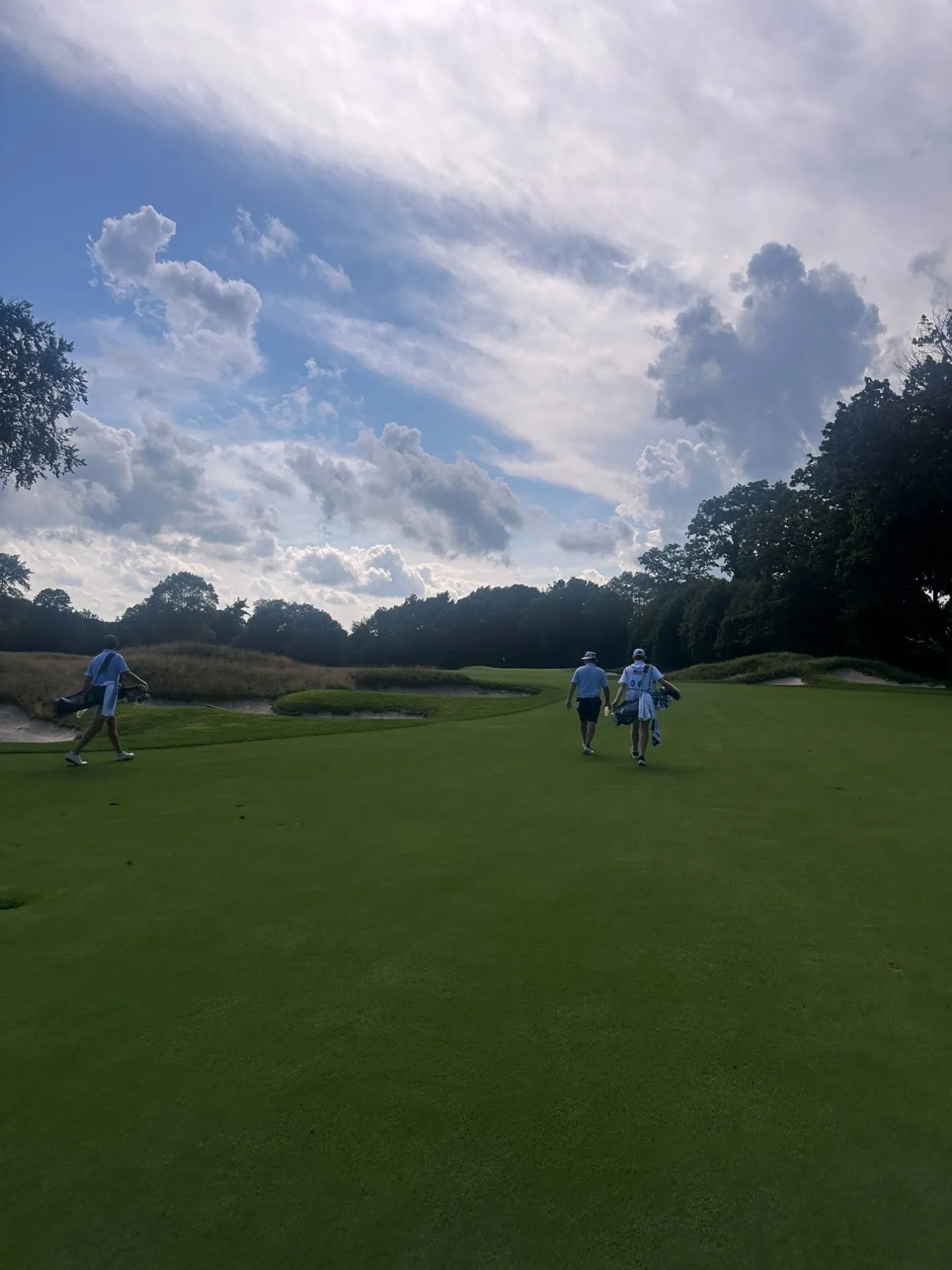
What made Hollywood stick with us was the way it challenged our assumptions about Travis as an architect. Before this trip, we knew him primarily as a player-turned-designer who built strategic, cerebral courses. Hollywood confirmed the cerebral part, but it also showed us a side of Travis that does not get enough credit: his ability to match the scale of his design to the scale of the land. Given a dramatic property, he did not shrink from it. He rose to it. The result is a course that feels as bold and confident as the man who built it.
We played Hollywood in the afternoon, the shadows lengthening across the hillsides as we worked our way through the closing holes, and by the end all three of us agreed on something: this was one of the best courses on the trip, and it was not one we had expected to say that about. Walter Travis, the quiet name in the Golden Age conversation, had built something here that stands toe to toe with the work of his more famous contemporaries. Sometimes the best discoveries on a trip like this are the ones you did not see coming.