Every great trip needs a great ending, and Friar’s Head delivered ours. After nine days of driving across Pennsylvania, New Jersey, and New York, of debating architects over dinner and replaying holes in our heads before sleep, we arrived at Long Island’s North Shore with the particular kind of exhaustion that comes from doing something you love too much and not wanting it to stop. Friar’s Head was the last course on the list, and it turned out to be the one that tied everything together.
Coore and Crenshaw are the modern heirs to the Golden Age philosophy. Bill Coore and Ben Crenshaw build courses the way the old masters did. They walk the land first. They let the terrain dictate the routing. They trust that the best holes are found, not manufactured. Their work at Friar’s Head, which opened in 2002, is widely considered one of their finest achievements, and after playing it, I understand why. This is a course that feels ancient on a property that could be in Scotland, designed by architects who studied the Golden Age so deeply that their work sits comfortably alongside it.
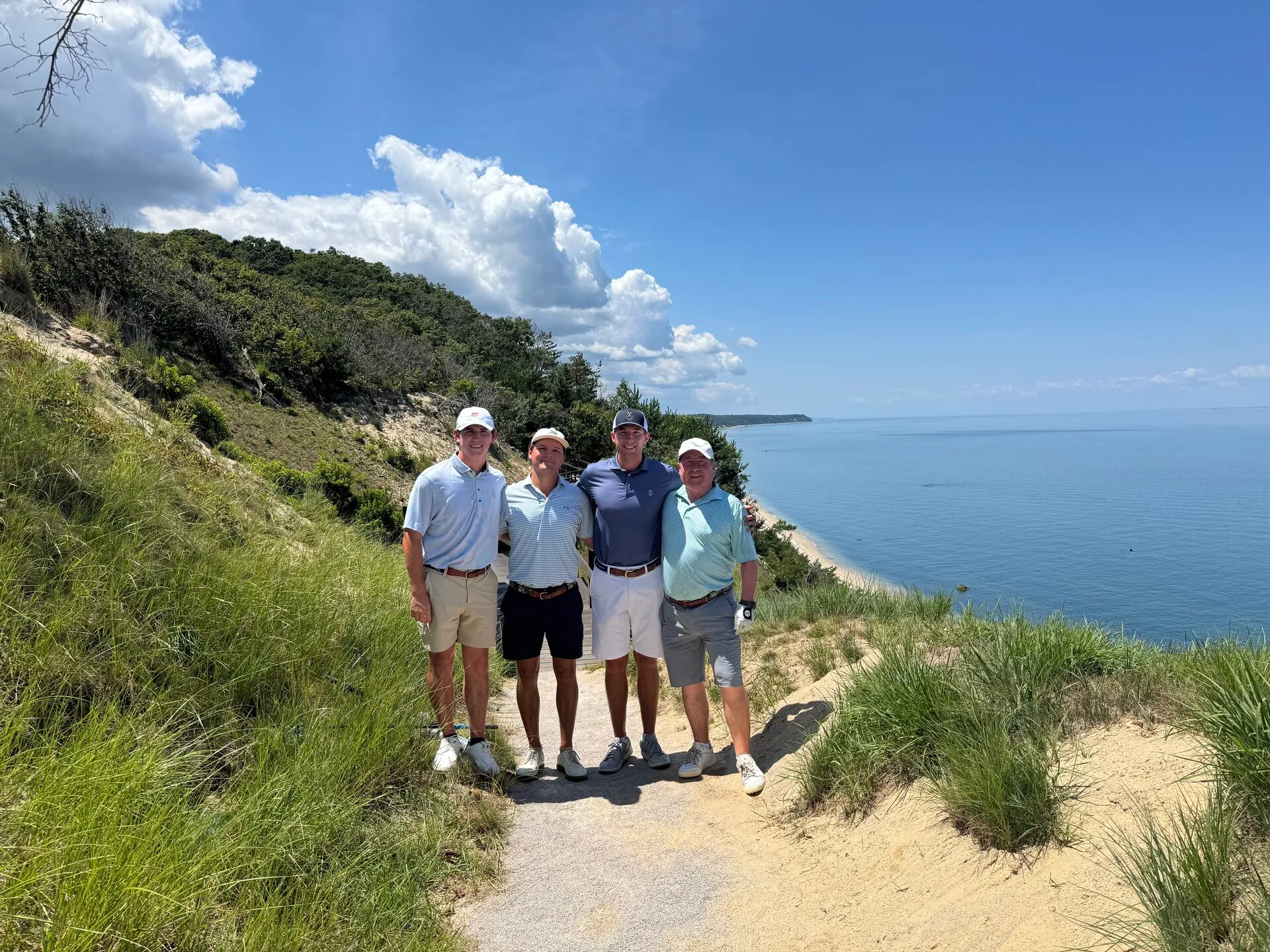
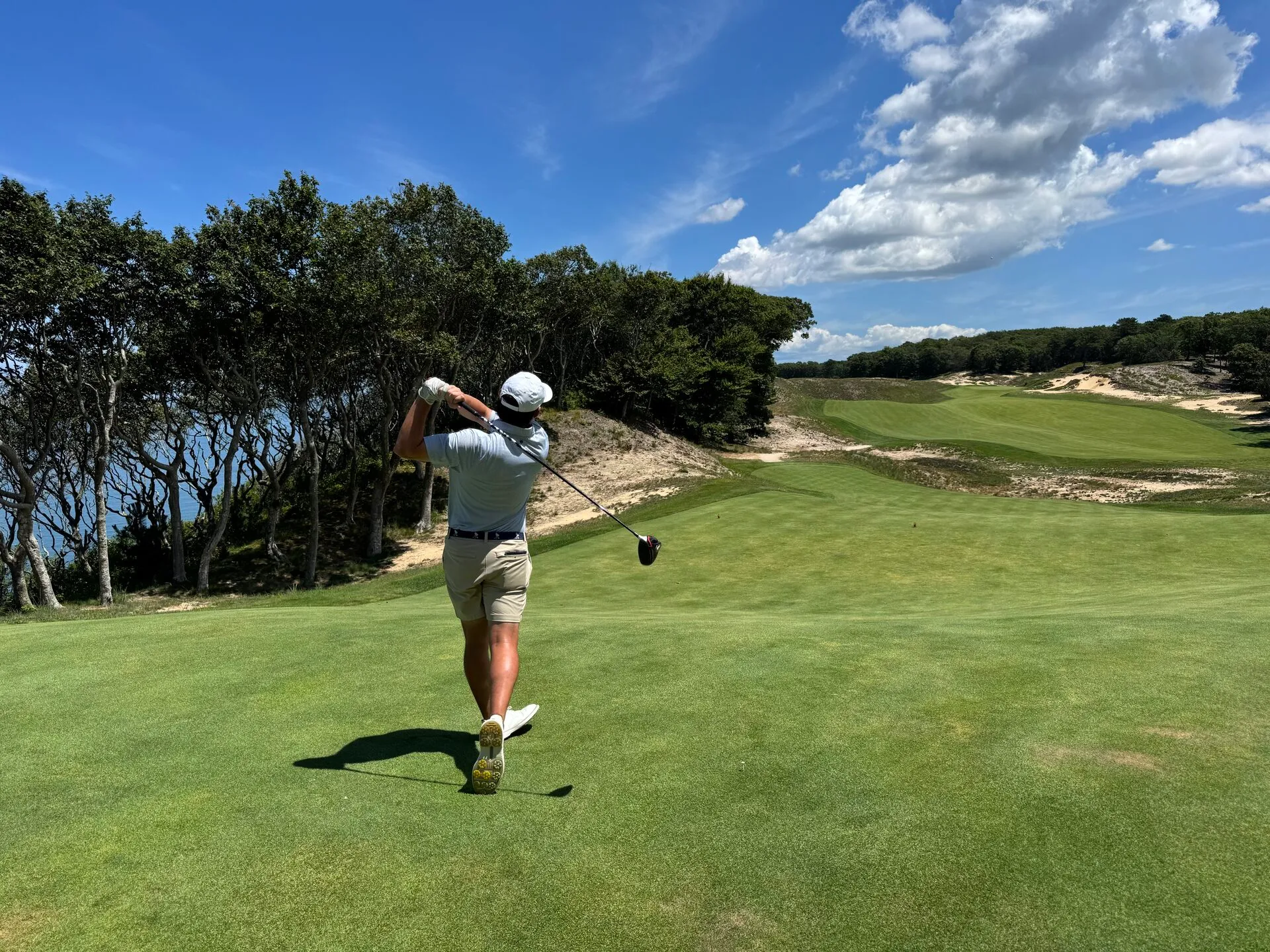
The foursome on the bluff. Long Island Sound behind us, the final course of the trip ahead. This is why you chase it.
Links on Long Island
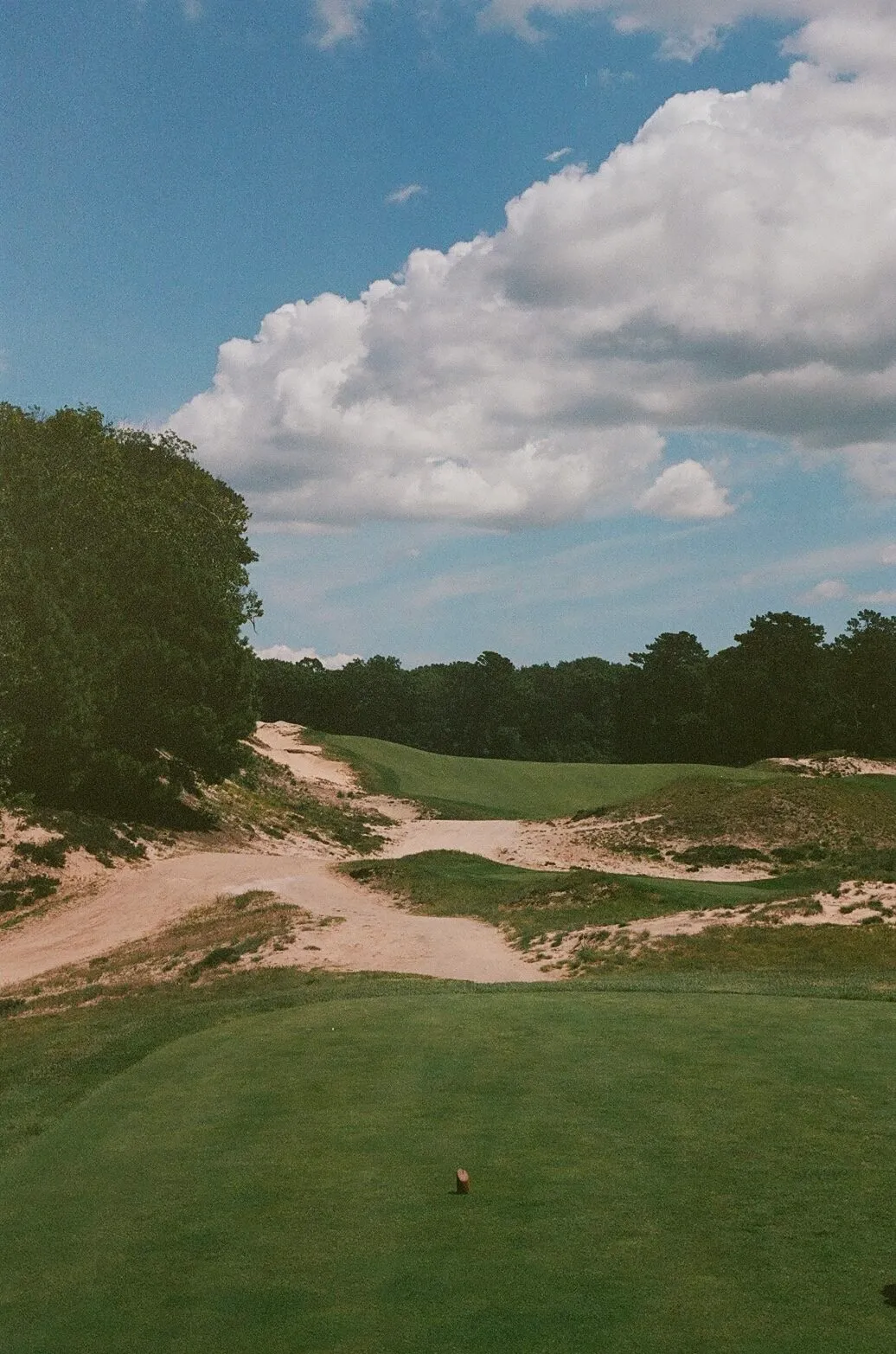
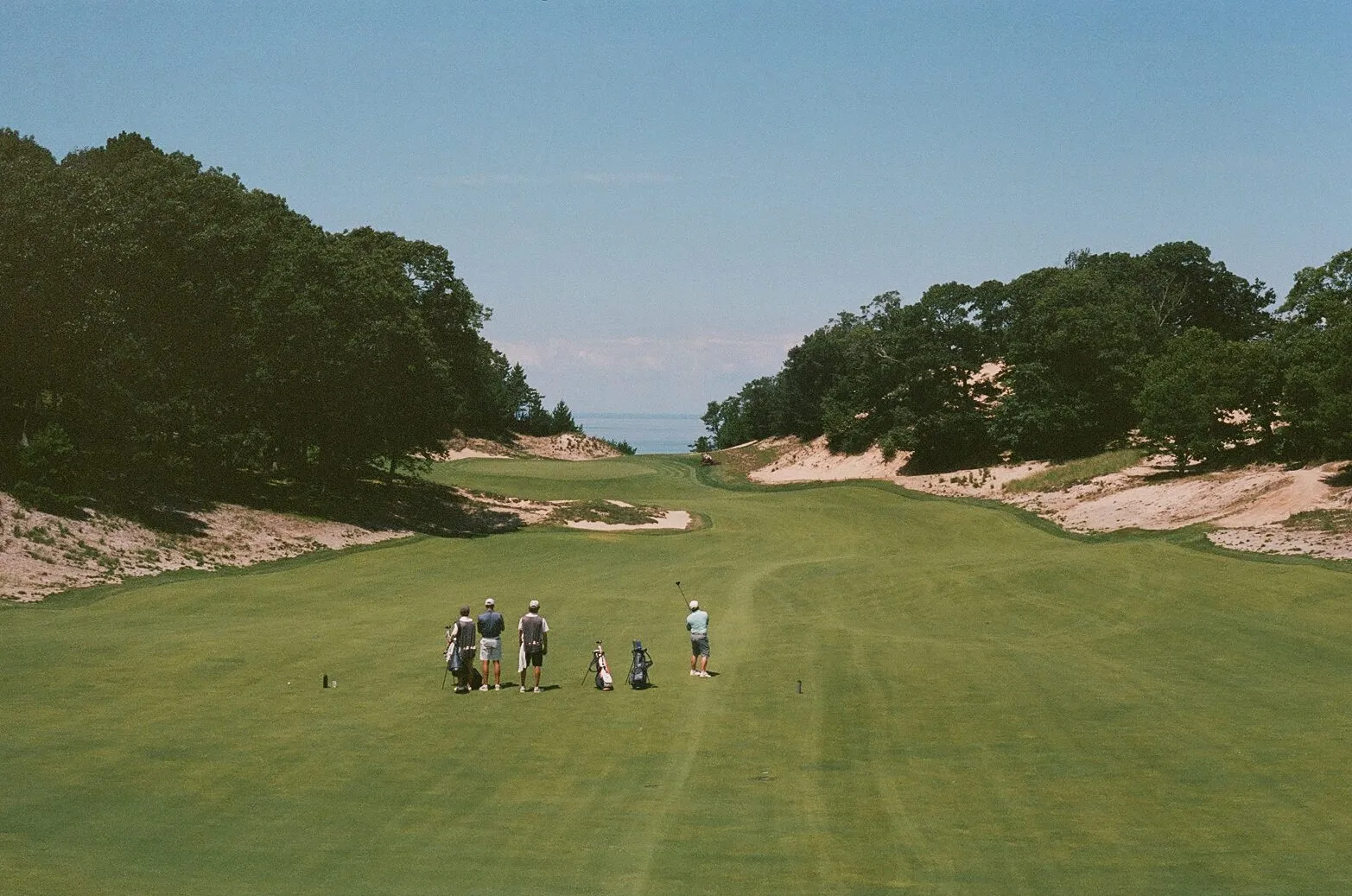
The property at Friar’s Head is unlike anything else we played on this trip. Perched on the bluffs above Long Island Sound, it moves through three distinct landscapes: coastal links along the water, inland meadows with rolling terrain, and wooded uplands with views that stretch for miles. Coore and Crenshaw exploited each of these environments fully, routing holes that feel native to their specific piece of ground. The links holes play firm and fast, with the wind off the Sound adding a dimension of difficulty that changes by the hour. The inland holes have a more pastoral quality, with wider fairways and more forgiving angles. And the wooded holes demand precision, threading shots through corridors of trees to reach greens that sit perfectly in their clearings.
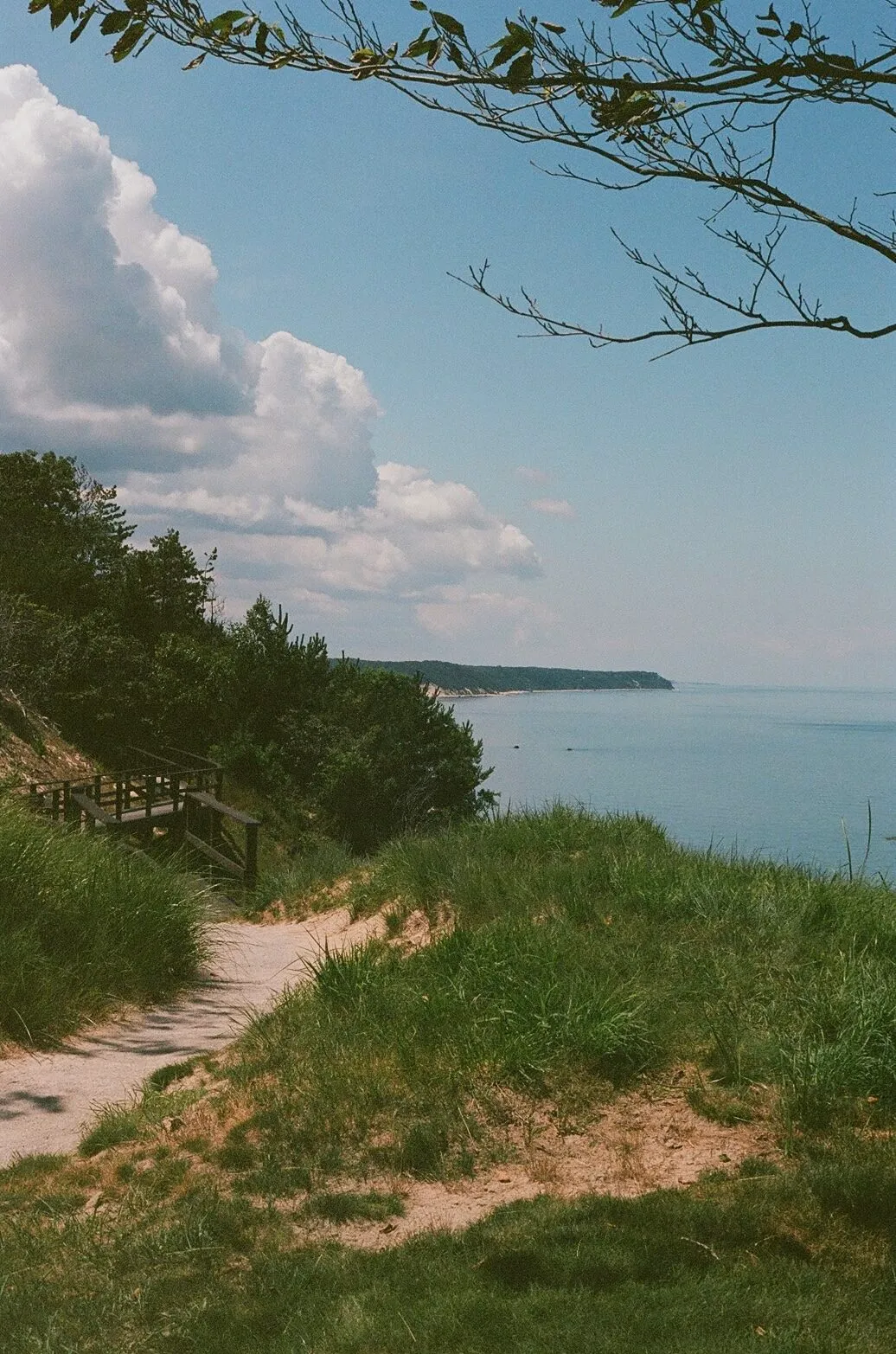
The variety is extraordinary. On most courses, you settle into a rhythm. You figure out what the architect is asking and you deliver it, hole after hole. At Friar’s Head, the ask keeps changing. Just when you think you understand the course, it shifts terrain, shifts character, shifts the relationship between wind and shot. It demands adaptability in a way that few courses do, and that adaptability is what separates a truly great round from a merely good one.
The Coore & Crenshaw Philosophy
Walking Friar’s Head, you see the direct line between the Golden Age architects we had been studying all week and the modern practitioners who carry their torch. Coore and Crenshaw share Doak’s minimalism, Tillinghast’s insistence on variety, Travis’s strategic intelligence. But they add something uniquely their own, a reverence for the natural landscape that borders on spiritual. Nothing at Friar’s Head looks forced. The bunkers appear to have been carved by wind and time, not by bulldozers. The greens roll and pitch with the terrain, their contours dictated by the land beneath them. Even the fescue that frames the fairways feels like it grew there on its own, an ecosystem rather than a design feature.
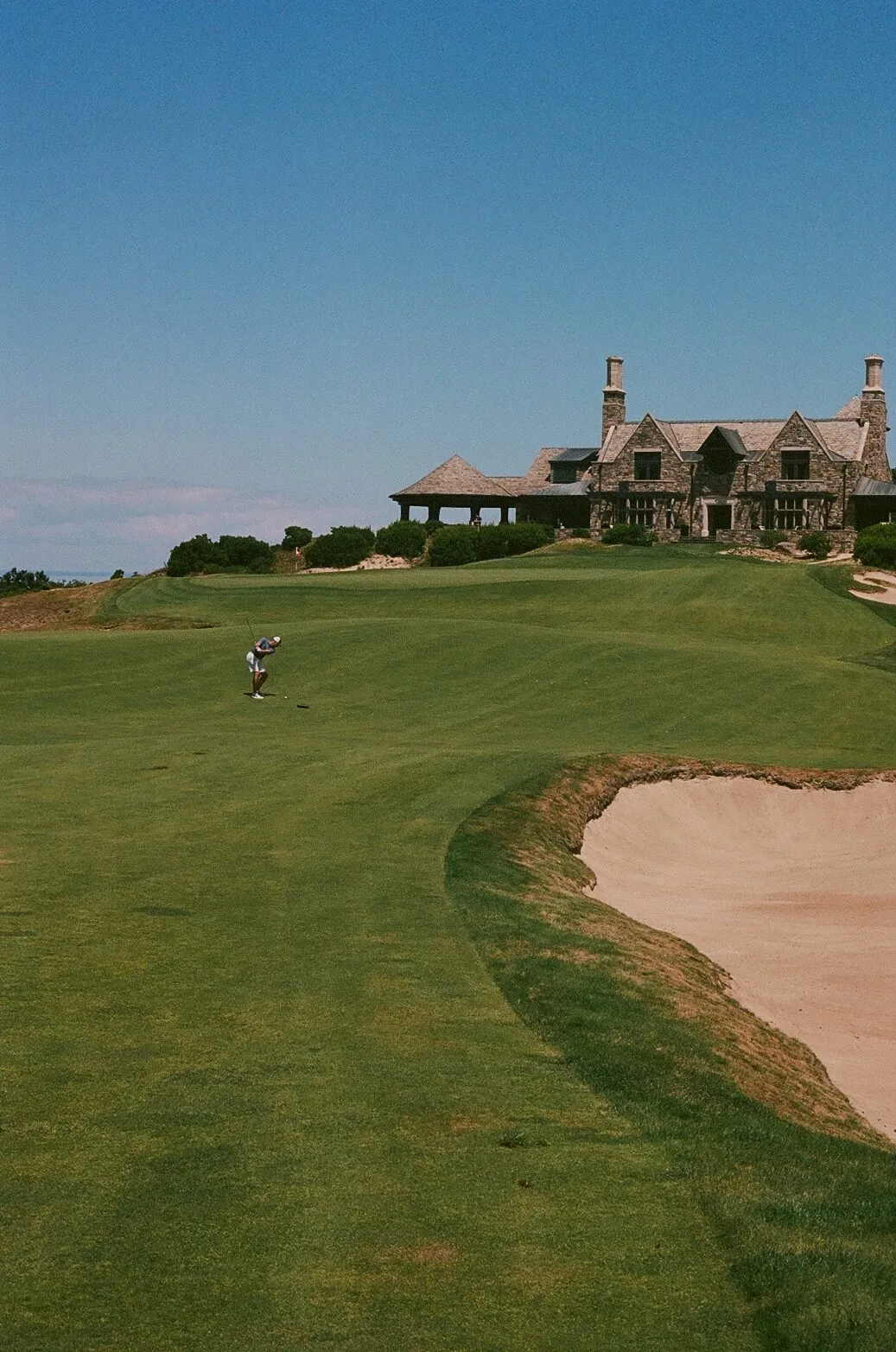
The green complexes are among the best we encountered on the entire trip. They are expansive, often multi-tiered, with internal contours that create wildly different putting challenges depending on the pin position. On one hole, you might face a 30-foot putt with three feet of break. On the next, a 15-footer that looks straight but runs away from you at the end because of a subtle ridge you did not see from the fairway. Reading these greens requires patience and humility, two qualities that nine days on the road had drilled into us by this point.
Old Barnwell on the Sound
For three caddies who spend their days at Old Barnwell in Aiken, South Carolina, walking Friar’s Head felt strangely familiar. Both courses share a commitment to the ground game that you do not find at most modern designs. At Old Barnwell, Brian Schneider and Blake Conant built a course on sandy South Carolina soil that rewards creativity and encourages you to use every club in the bag, to bump and run, to shape shots along the contours of the land. Friar’s Head does the same thing on a completely different canvas. The sandy soil, the firm and fast conditions, the greens that accept a well played running approach as warmly as an aerial one. Standing on the links holes at Friar’s Head with the Sound stretching out behind you, one of us said it out loud: this feels like Old Barnwell if you dropped it on the coast and turned the volume up. Different property, different architects, different era. Same philosophy. Same love for what the ground game can be.
The End of the Chase
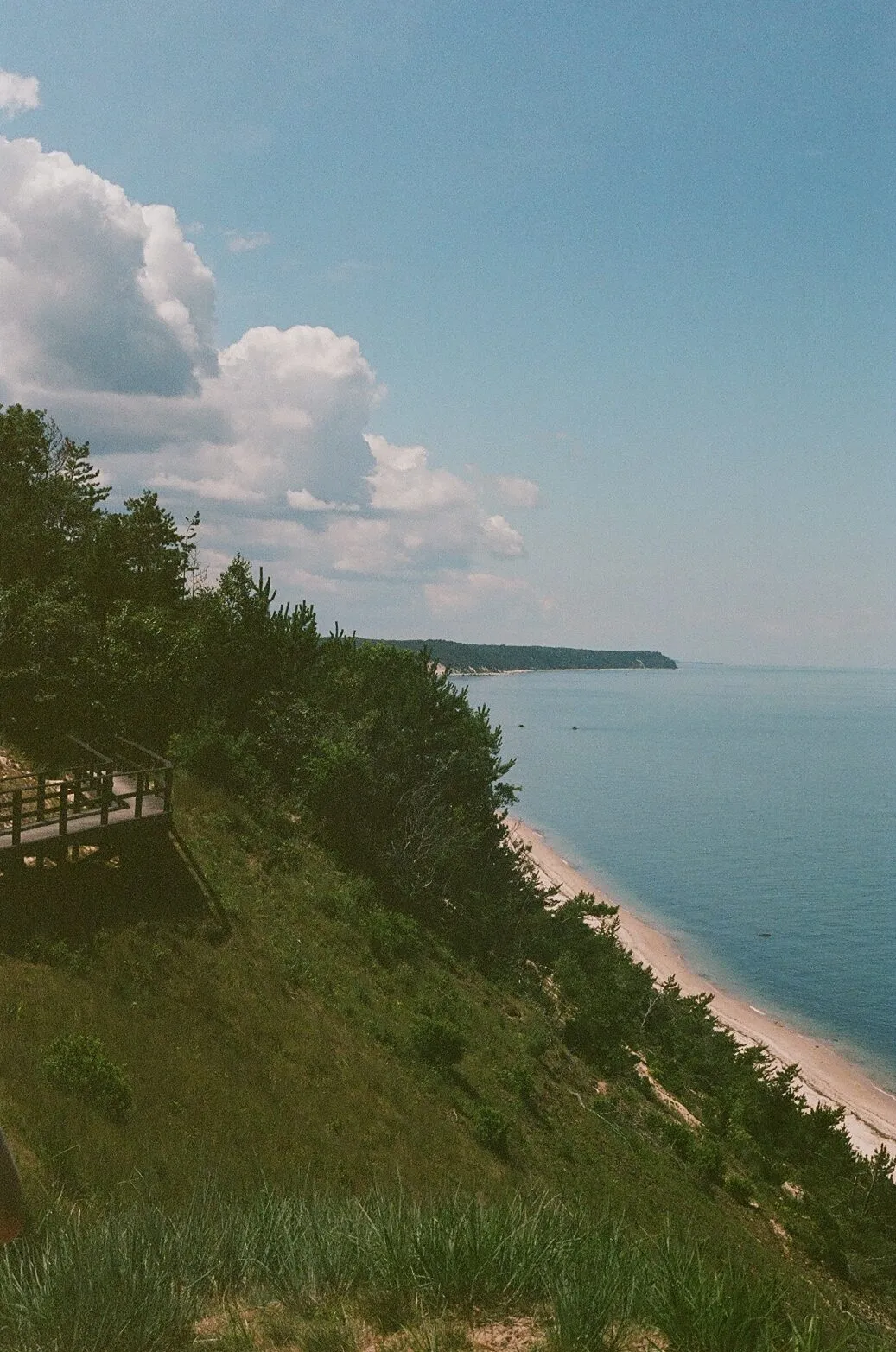
We played Friar’s Head on the last day of the trip. The weather cooperated. Late July on Long Island, the kind of warm, clear air that makes everything vivid and alive. The Sound was deep blue behind us as we played the coastal holes, and the light had that golden quality that only the best summer afternoons deliver. It was, quite simply, one of the most beautiful rounds of golf any of us had ever played.
Standing on the final green, looking back at the course stretched out behind us and the Sound glittering in the distance, there was a moment when the three of us just stopped and took it in. Nine days. Eight courses. Thousands of miles. More architecture than we could process in a year, let alone a week and a half. We had started this trip as three Evans Scholars and Old Barnwell caddies who loved golf architecture. We were leaving it as something more. As students of the game who had walked the ground that shaped it, who had seen firsthand the difference between courses that are built and courses that are discovered.
Friar’s Head was the perfect ending because it proved that the Golden Age is not a period. It is a philosophy. It is the belief that great golf courses come from great land, shaped by architects who are humble enough to listen to it. Coore and Crenshaw understand that. Schneider and Conant understand that. The architects we had been studying all week understood that. And now, after walking in their footsteps, we understood it too.
The chase continues. But this is where it truly began.