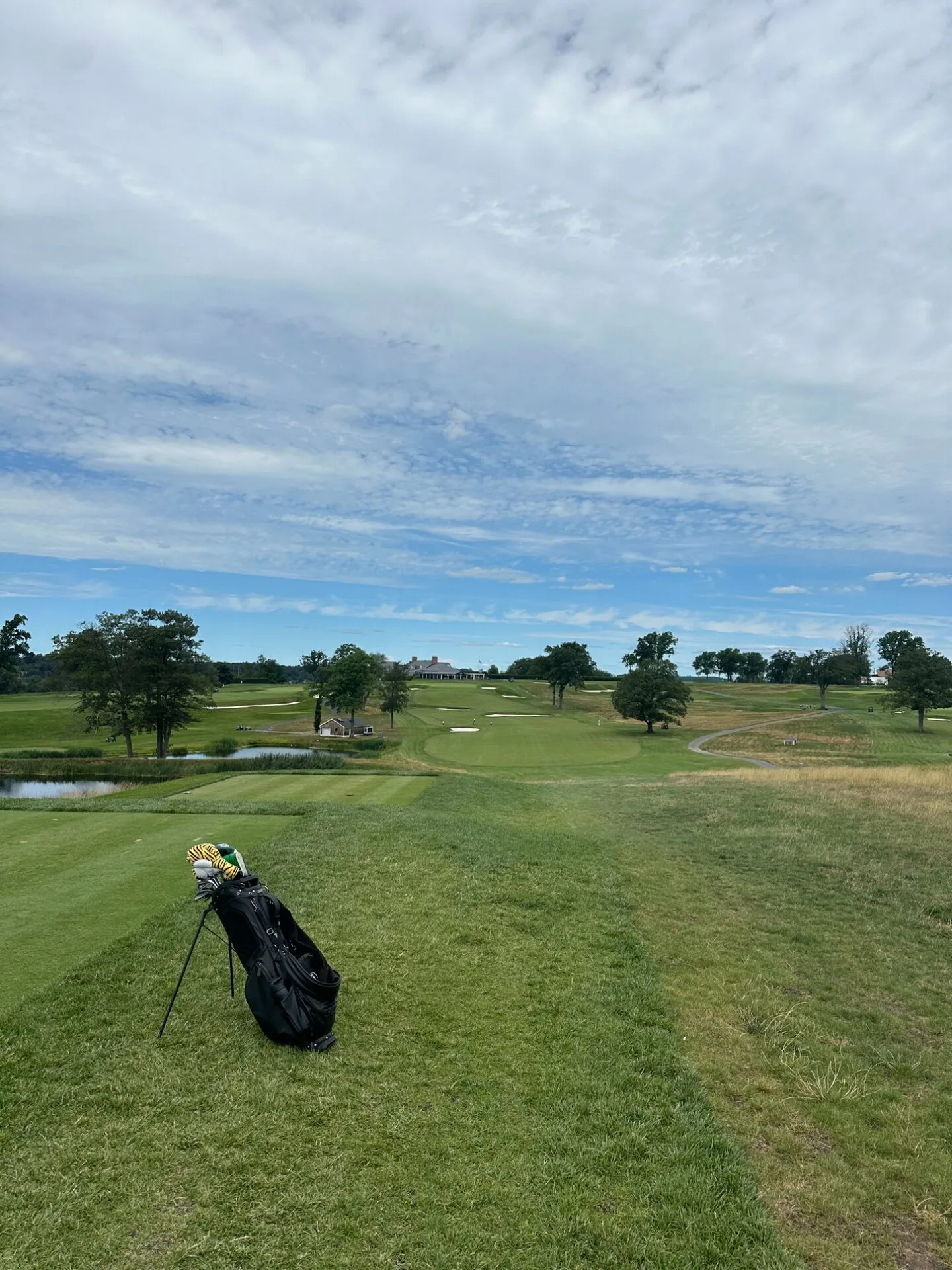
Some courses carry their history lightly, wearing it like a comfortable old jacket you barely notice anymore. Essex County Country Club wears its history like a crown. Founded in 1887, it is the oldest golf club in New Jersey and the sixth oldest in the entire United States, and it carries that weight with a quiet dignity that hits you the moment you turn into the property. The original clubhouse, once the Orange Springs Hotel, a health resort built around the area’s mineral springs, still anchors the grounds, and you can feel the layers of time in every corner of the place.
We arrived at Essex County in the middle of the trip, deep enough into our nine days that we had started to develop a shared vocabulary for what we were seeing. We could talk about routing without sounding like we were reading from a textbook. We could feel the difference between a green that was designed and one that was merely shaped. That fluency made Essex County even more rewarding, because this is a course that rewards close attention. A collaboration between three of the Golden Age’s most important architects that somehow coheres into a single, unified experience.

Day four. The foursome on the tee at Essex County with the entire property spread out behind us. Tillinghast holes on the left, Raynor-Banks on the right, and somehow it all works together.
Three Architects, One Course
The architectural history here reads like a who’s who of the Golden Age. A.W. Tillinghast laid out the original 18 holes on the upper portion of the property in 1916. Then Seth Raynor designed a second 18 on the lower slopes, and after Raynor’s death, Charles Banks completed that construction. Eventually, the club settled on its current configuration, a course that blends seven Tillinghast-designed holes with eleven holes from the Raynor-Banks collaboration. On paper, that sounds like a Frankenstein situation, a course stitched together from mismatched parts. On the ground, it plays like nothing of the sort.
Gil Hanse’s recent renovation work deserves enormous credit for that cohesion. Hanse, who learned his craft as Tom Doak’s first employee, understood the DNA of all three architects and found a way to honor each one while creating a flowing, continuous experience. The transitions between Tillinghast holes and Raynor-Banks holes are seamless. You notice the stylistic differences if you are paying attention, the bolder bunkering on the Banks holes, the more organic contours on the Tillinghast holes, but they complement each other rather than competing.
The Property
The setting itself is part of the story. Essex County sits on the slopes of the Orange Mountains, and the views from several elevated tees stretch out across the New Jersey landscape in a way that makes you forget you are twenty minutes from Manhattan. There is a grandeur to this place that is not manufactured. It comes from the terrain, from the old-growth trees, from the sense that people have been playing golf on this ground for nearly a century and a half.
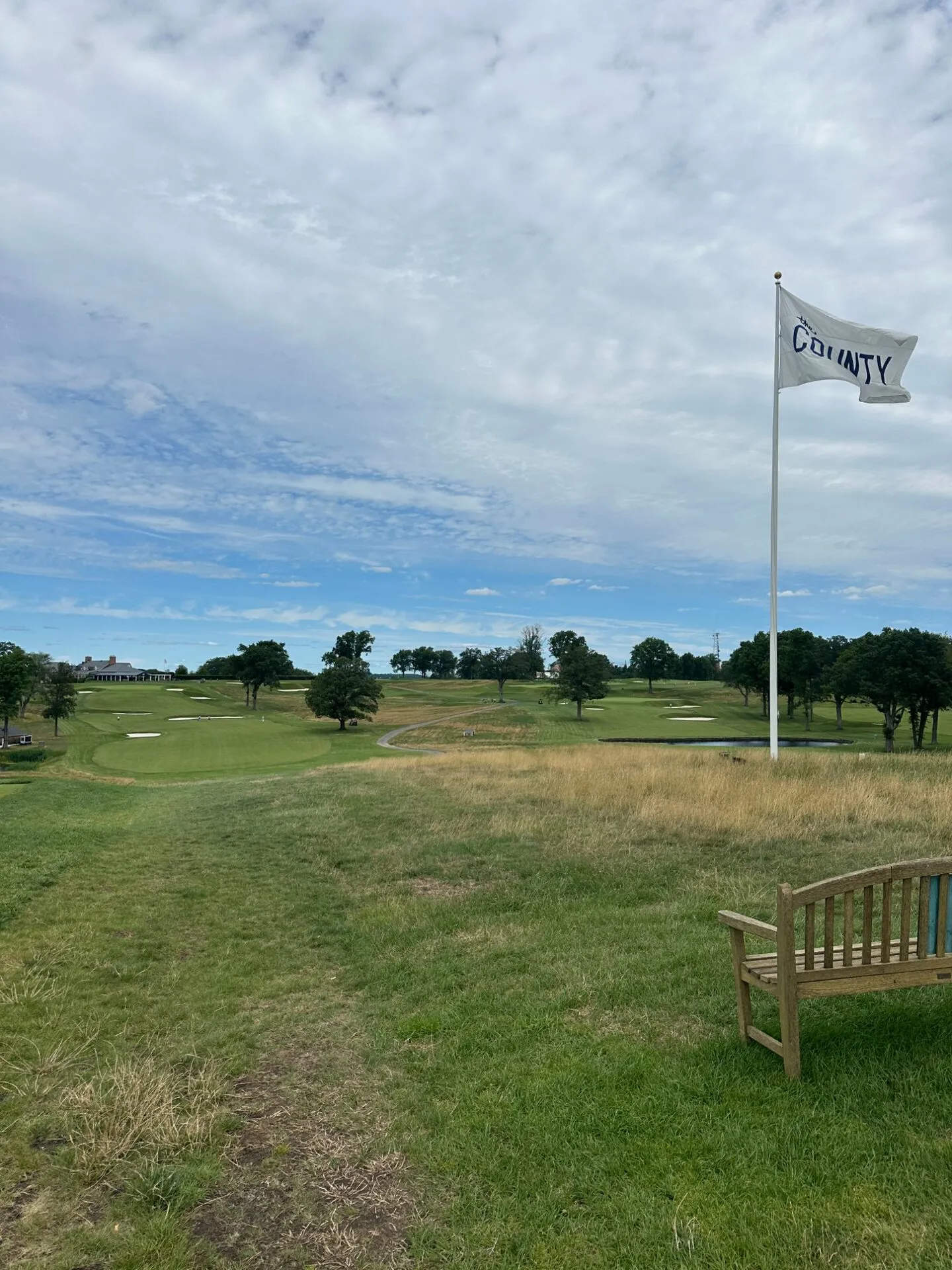
What struck all three of us was the variety. The Tillinghast holes tend to be more internally dramatic. Bold green contours, strategic bunkering that forces decisions, that unmistakable Tillinghast intensity where every shot matters. The Raynor-Banks holes bring the template tradition into play, with recognizable strategic concepts adapted to the specific slopes and angles of this property. Together, they create a round that never repeats itself, where every hole asks something new.
A Living Museum
Walking Essex County felt like walking through a living museum of Golden Age architecture. Not a stuffy museum. This course is very much alive, with firm fairways, challenging pins, and greens that will embarrass you if you get on the wrong side of the slope. But the sense of historical depth is undeniable. You are playing holes that Thomas Edison, who was a member here, might have played, on ground that three of America’s greatest architects shaped with their hands and their convictions about what golf should be.
Among the three of us, this was one of the most discussed courses of the entire trip. Not because it was the hardest or the most famous, but because it raised the most interesting questions. How do you blend three different architectural voices into one experience? What does it mean for a course to evolve over more than a century? Can renovation honor the past without being a slave to it? Essex County answers all of those questions, and the answer, in each case, is yes.